Survive Our Collapse Building Self-Reliance in an Uncertain World
Related Articles



When disaster strikes, food supply chains can collapse overnight. Whether you’re in an apartment, a small yard, or stuck indoors during an emergency, being able to grow your own food is a game-changer. Here’s how to do it with minimal space and maximum output.
1. Choose High-Yield, Fast-Growing Crops
Focus on plants that grow quickly, can be harvested multiple times, or provide high calories or nutrition per square foot.
Best Crops for Small Spaces:
Leafy Greens: Lettuce, kale, spinach, Swiss chard (harvest continuously)
Herbs: Basil, cilantro, parsley, oregano (small footprint, big flavor and medicinal use)
Root Veggies: Radishes (mature in 25 days), carrots, beets
Compact Tomatoes: Cherry or dwarf varieties grow well in containers
Green Beans & Peas: Use vertical space, high-yield
Potatoes: Grow in buckets or grow bags
Microgreens: Super nutritious, harvest in 7–14 days
2. Use Vertical Gardening Techniques
Maximize space by growing upward instead of outward.
Methods:
Wall-mounted planters
Hanging baskets
Trellises for vines (beans, peas, tomatoes)
Stackable garden towers
DIY vertical racks with buckets or recycled containers
3. Grow in Containers or Grow Bags
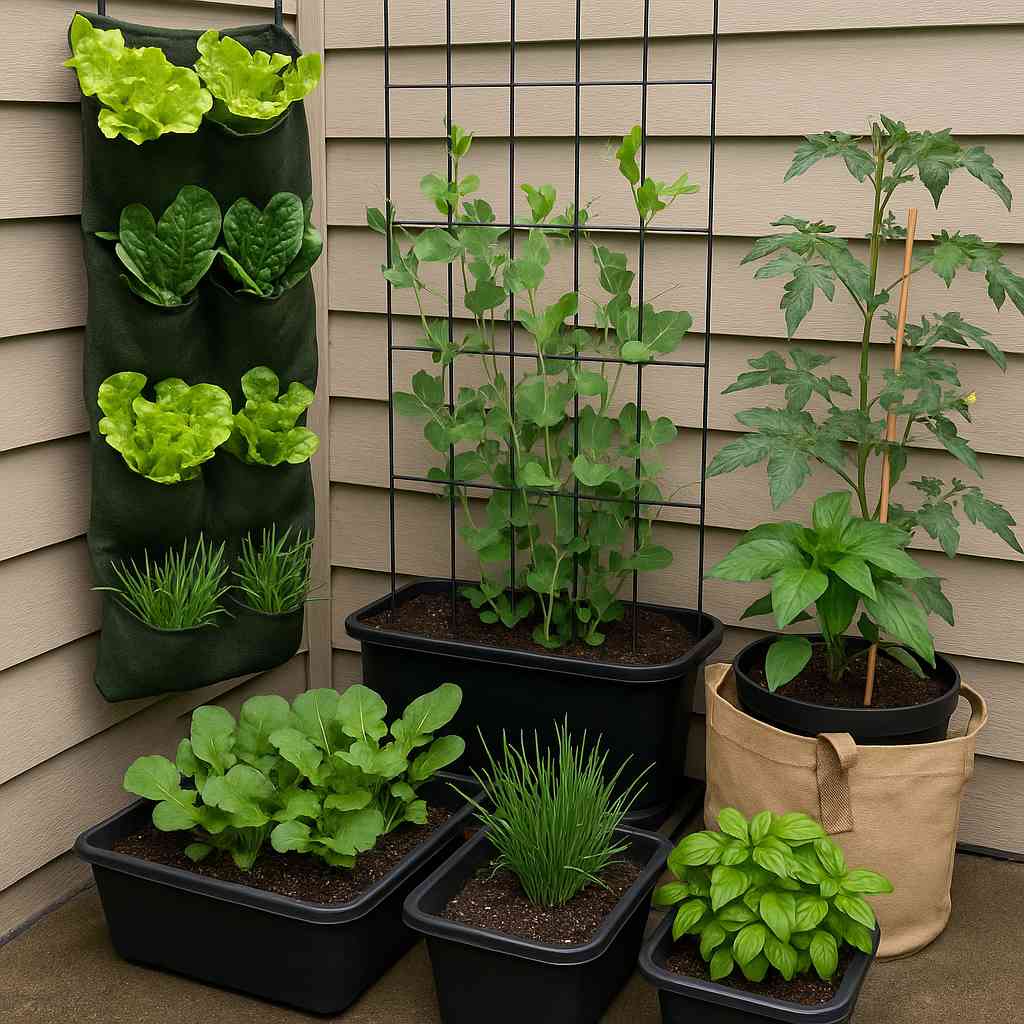
You don’t need a garden. Use containers on patios, balconies, windowsills, or even indoors under light.
Container Ideas:
5-gallon buckets
Fabric grow bags (allow roots to breathe)
Storage totes with drainage holes
Cut plastic bottles for herbs or microgreens
Tip: Ensure proper drainage. Use a mix of compost, peat, and perlite for optimal soil.
4. Indoor Growing with Lights (If Needed)
If sunlight is limited or non-existent (especially in winter or apartments), invest in LED grow lights.
Essentials:
Full spectrum grow lights
Timers (mimic natural daylight)
Small fan (improve airflow and prevent mold)
Great for:
Microgreens
Lettuce and greens
Herbs
Starter seedlings
5. Learn Hydroponics (Optional but Powerful)
Hydroponics allows food production without soil and uses 90% less water. Systems can be made from plastic tubs, PVC pipes, or buckets.
Kratky Method (No Pump Needed):
Place plants in net pots over nutrient-rich water
Water level drops as roots grow
Perfect for lettuce and herbs
6. Compost and Reuse Kitchen Scraps
In a prolonged disaster, store-bought fertilizer may be unavailable.
DIY Nutrient Sources:
Banana peels (potassium)
Crushed eggshells (calcium)
Used coffee grounds (nitrogen)
Compost tea from food scraps
Worm compost bins (vermiculture)
7. Build a Seed Stockpile
Keep a backup of non-GMO, heirloom seeds for future growing. These seeds can be harvested and replanted indefinitely.
Store seeds:
In airtight containers
Cool, dry location
Rotate and replant yearly to keep stock viable
8. Start Now, Not Later
Disaster gardening takes practice. Don’t wait until food is scarce.
Action Plan:
Start with a small herb garden this week
Add one new container crop each month
Learn your local growing conditions
Practice seed saving and crop rotation
Conclusion: Food Security Starts With You
You don’t need acres of farmland to feed your family. With some planning, a little light, and the right crops, you can build a self-sustaining food source from a porch, windowsill, or balcony.
When others are waiting for handouts, you’ll be harvesting dinner.